
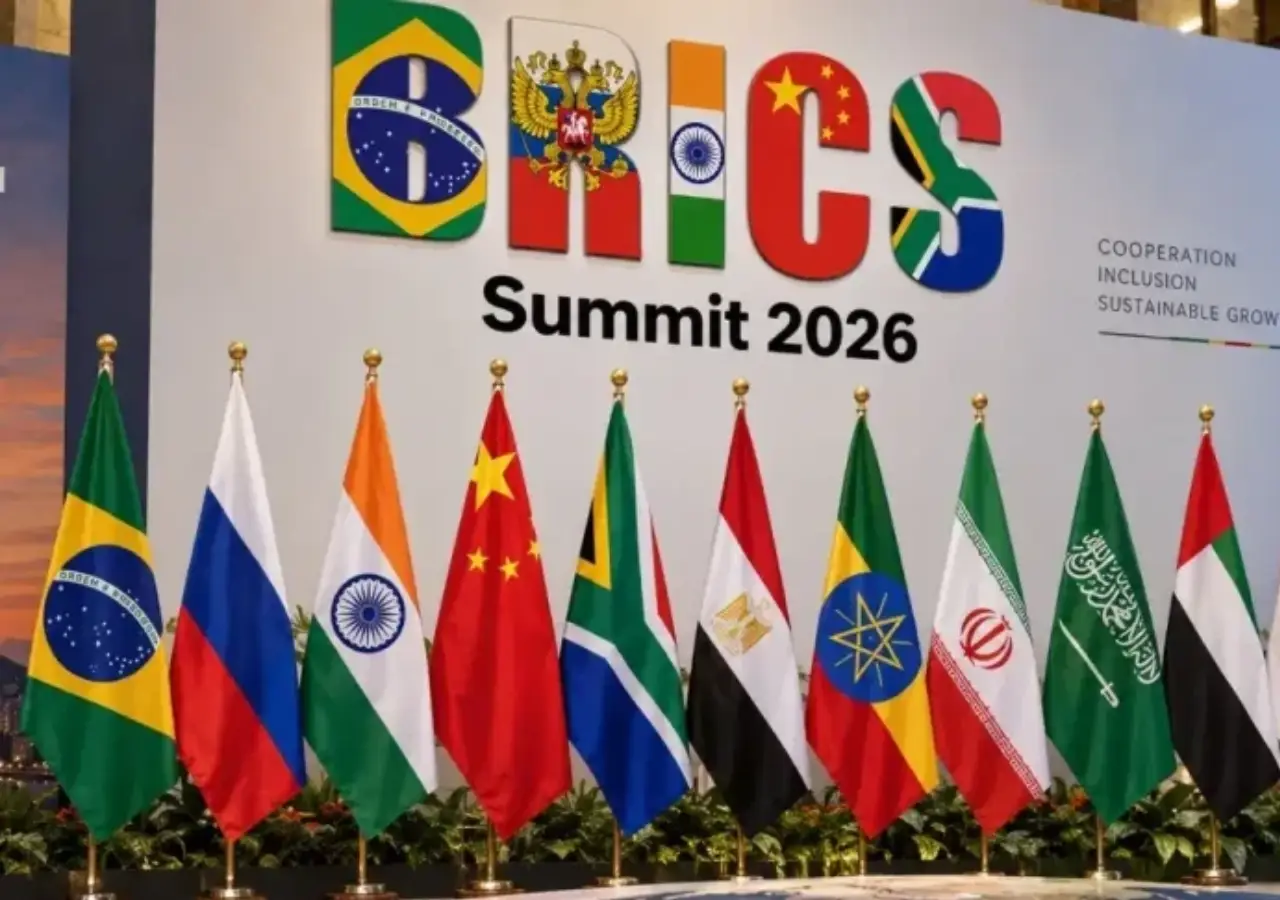
BRICS Summit 2026 in New Delhi has sparked discussions around the world. India is hosting the summit on September 12–13, 2026, at a very sensitive moment. Because of geopolitical tensions and economic uncertainties, many concerns have been raised across the global economy, and this has also made the BRICS Summit a much more closely watched event. This year also marks 20 years since BRICS was established.
Table of Contents
BRICS was established 20 years ago. It was originally formed by Brazil, Russia, India, and China, with South Africa joining the group in 2010. Since then, BRICS has expanded to include Egypt, Ethiopia, Iran, Saudi Arabia, the United Arab Emirates, and Indonesia. The expansion of the group has increased its economic and political weight, but it has also raised concerns because these countries have different approaches and different interests on various global issues. This creates a challenge for the group in terms of how these countries will come together, manage their differences, and work on common issues.
Also Read: Anthropic Forecasts AI-Driven GDP Growth, but Warns of Risk and Employment Uncertainty
BRICS Expansion: Bigger Bloc, but a More Divided BRICS
The inclusion of new countries in BRICS is both an opportunity as well as a challenge for India. The expansion of the group has given BRICS a wider economic base and stronger representation of the Global South. It has also brought more emerging economies together on a common platform. However, at the same time, differences among member countries over international conflicts, economic policies, and their relations with Western countries can make common decision-making more difficult.
Because different countries like Saudi Arabia, Iran, UAE have different perspectives, interests, and approaches towards various global and economic issues, their points of view can sometimes conflict, particularly on major geopolitical issues. The current situation of our economy has been exacerbated by the incessant ongoing war in West Asia, and this is a key challenge for this summit because it has shown how difficult it could be for these BRICS nations to reach a unanimous decision and agree on a common point or common position on major geopolitical issues.
At this point, India is in a very sensitive position as it has to maintain a balance among countries with different interests and approaches. While some member countries increasingly view BRICS as a platform to challenge Western dominance and reduce dependence on the US dollar, India has largely preferred a more practical and inclusive approach. India’s main focus is not to explicitly exclude or sideline Western countries, but to increase inclusivity and provide emerging economies with a stronger platform for cooperation. This balancing approach could become particularly important for India as it tries to bring countries with different views together while keeping BRICS focused on common areas of cooperation.
Also Read: Trump Forecasts Oil Prices Below $2 After US Victory Over Iran.
India’s Diplomatic Balancing at BRICS
Because India is the host country, its position has become very important for further things that take place because of summit, especially because of its relationships both within and outside BRICS.
As a member of the Quad, India also maintains strong strategic and economic partnerships with Western countries, which adds another important dimension to its position at the BRICS Summit. On the other hand, Russia remains an important strategic partner for India, while China is both a major economic power and a strategic competitor. The expected presence of Chinese President Xi Jinping at the New Delhi Summit adds another layer to India’s diplomatic challenge.
India-China relations have shown some signs of improvement in recent times, but significant economic and strategic distrust still exists because of their past and ongoing differences. This makes the BRICS Summit more significant for India, as it is not just another multilateral meeting. This gives India a platform or opportunity to show around the world its capability to engage with developed powers or compete with them without becoming a part of any single geopolitical camp.
From Statements to Action: Can BRICS Deliver Practical Cooperation?
BRICS summit success will depend on many factors rather than only the final declaration or statements made by member states. The bigger question is whether the expanded bloc can turn its political statements and promises into practical cooperation. Resilience, inclusivity, cooperation, and sustainability, these are the primary key areas around which BRICS works, and it supports humanity over anything; its main purpose is to promote inclusivity, cooperation, and sustainability.
BRICS works on certain areas, or there are certain areas around which BRICS countries come together and work, like food and energy security, healthcare, disaster resilience, critical supply chains, technology, climate action, and economic cooperation. These BRICS countries come together to work on these areas even when they have different opinions on geopolitical issues. The ongoing war or conflict has made it difficult for countries to support each other’s priorities, as their interests and approaches are not always the same.
Therefore, to make this summit successful, or to make the countries strong enough or strong-headed to work together unanimously, we need to strengthen supply chains, improve digital cooperation, support developing economies, and expand financial inclusion, which could provide benefits to BRICS members without requiring them to agree unanimously on every international issue. India has been working in all these sectors for a lot, and it has also pushed several development-oriented activities and initiatives, including cooperation in technology, trade, agriculture, healthcare, and sustainable development. Multiple practical approaches could help BRICS avoid becoming primarily merely a forum for geopolitical disagreement, and instead make it a platform that delivers meaningful cooperation.
Also Read: World Goods Trade Significantly Increases Despite Middle East Conflict, AI Demand Offers Support
What Does BRICS Hold for India’s Future?
The BRICS Summit is a real opportunity for India to position itself as a bridge between different economies and work towards a more inclusive and sustainable path. The purpose does not have to be to eliminate every disagreement among member countries or exclude any particular group. Rather, its primary focus is always to identify the key areas where countries can work together and come towards a unanimous decision to work towards common goals. Inclusivity and sustainability always remain the centre point of this approach, despite political differences.
If India succeeds in bringing BRICS countries together to work towards sustainable development in areas such as trade, technology, energy, healthcare and supply chains, it could strengthen BRICS as a more practical platform for the Global South. This could help BRICS countries move towards stronger cooperation in these areas and make the bloc more focused on practical development despite their political differences. However, multiple challenges lie ahead. One of the biggest challenges is the ongoing conflict and geopolitical tensions, which can create differences in interests among member countries. When countries face different geopolitical situations and priorities, reaching a common position becomes more difficult.
India’s diplomatic success will therefore depend on whether it can keep the main objectives of the summit focused on cooperation and sustainable development without allowing political differences and conflicts to dominate the discussion. India does not need to make every country agree on every issue; instead, it needs to find enough common ground for meaningful cooperation.
Ultimately, the BRICS Summit in New Delhi is an opportunity for India to demonstrate strategic autonomy while continuing to support inclusive international cooperation. The conclusion of India’s BRICS chairmanship will not simply test the strength of the bloc; it will also test India’s ability to bring a larger and more diverse group of countries together without excluding any particular side. If India can maintain this balance, the New Delhi Summit could become an important step towards making BRICS a stronger and more practical platform for cooperation among emerging economies.





1 thought on “BRICS Summit 2026: What Comes Next for India?”