The Strait of Hormuz has once again come into the news, as recent statements by the United States have raised several expectations regarding the future of the strategically important waterway. From predictions about oil prices falling to as low as $2 per barrel to statements about potentially bringing the war to an end, several expectations and discussions are emerging around the future of the Strait and the ongoing conflict.
However, the latest development cannot be interpreted as a complete reopening or a return to normal shipping activity. Although some vessels are now able to move through the waterway, overall shipping activity remains far below its normal level, while the continuing escalation of the U.S.-Iran war has made the situation even more unpredictable for global energy markets and the world economy.
From Washington’s statements regarding Iran’s control over the route to its recent moves amid the ongoing conflict, the situation around the Strait has once again attracted attention from global energy markets. However, the latest development cannot be interpreted as a complete reopening or a return to normal shipping activity. Although some vessels are now able to move through the waterway, overall shipping activity remains far below its normal level, while the continuing escalation of the U.S.-Iran war has made the situation even more unpredictable for global energy markets and the world economy.
Table of Contents
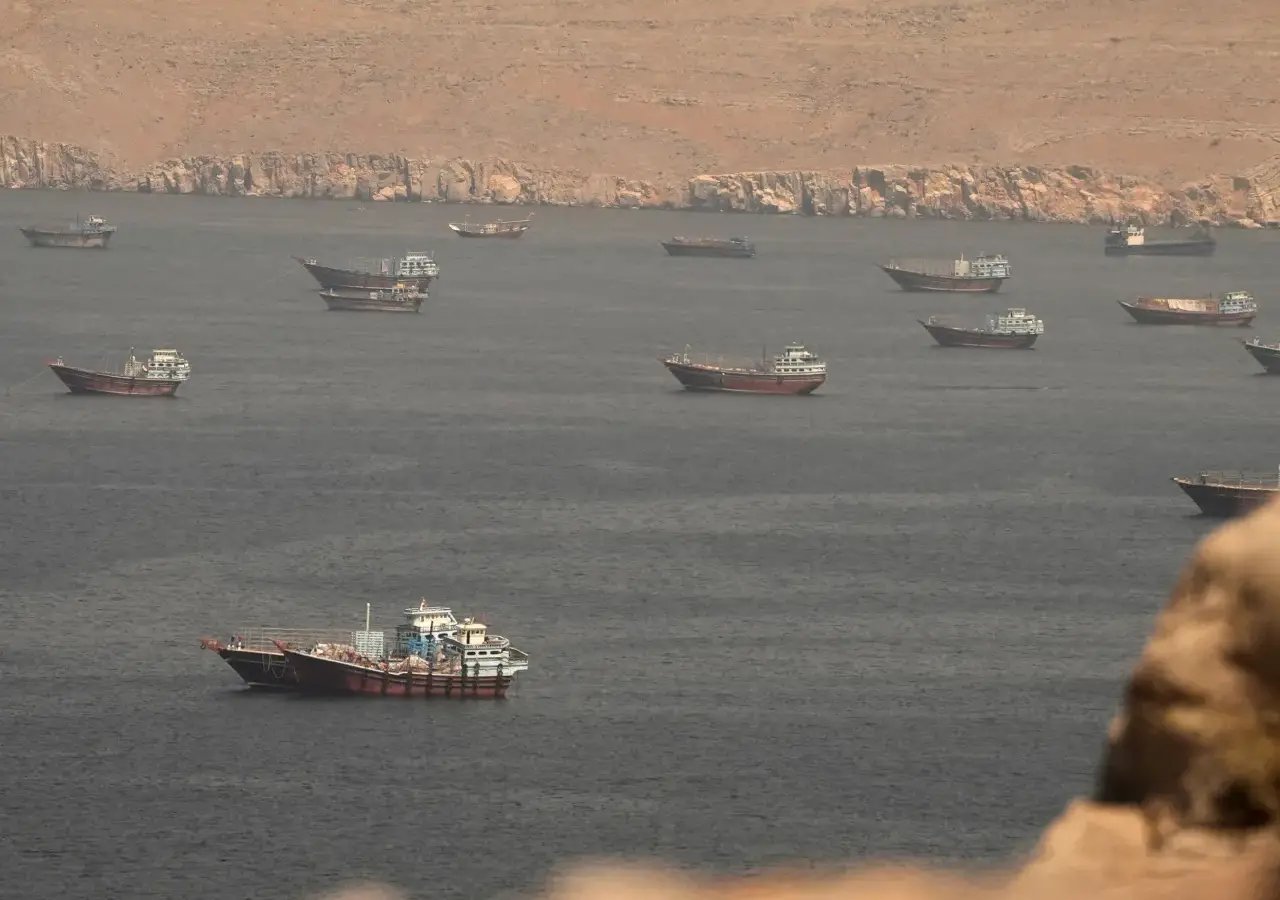
According to the latest report, vessel traffic through the Strait of Hormuz fell to only seven vessels on Thursday, compared with 11 vessels earlier and a 10-day average of 15. Initially, when there was no war-like situation, around 125 large commercial vessels passed through the waterway every day. This condition shows that even though restrictions around the route have eased to some extent and the Strait is now partially accessible, it does not mean that the pathway is fully ready for normal commercial shipping or that things have returned to normal. The return of vessels through the Strait may be a positive development, but it will take time for shipping activity to return to normal, particularly as uncertainty and security concerns continue to surround the region.
Also Read: BRICS Summit 2026: What Comes Next for India?
Strait of Hormuz: A Key Route for Global Energy Shipping
The Strait of Hormuz is one of the world’s most important waterways when it comes to the shipping of energy. It connects the Persian Gulf with the Gulf of Oman and stands out as a key route for the shipment of oil and liquefied natural gas. Any kind of disruption in this pathway can create major economic problems on a very large scale.
When warships and commercial vessels avoid the route because of security risks, energy companies face higher transportation costs, while uncertainty around the entire shipping process continues to increase. Everything can become so unpredictable that it may create huge economic pressure across the world. The impact can eventually reach consumers through higher food prices, increased transportation costs and inflation.
For example, ordinary people can eventually feel the impact at the household level as higher prices and rising costs put additional pressure on their daily expenses. The current economic situation has only recently started to stabilize after facing several challenges, and another major disruption in energy and shipping markets could make the situation even more difficult. Brent crude oil has already moved above $100 per barrel, while logistics and shipping costs, particularly for large oil tankers, have increased significantly amid the ongoing tensions.
Also Read: Trump Forecasts Oil Prices Below $2 After US Victory Over Iran.
Strait of Hormuz: The War Is Still Far From Over
The recent easing of restrictions around the Strait of Hormuz does not mean that everything has returned to normal or that the broader conflict has come to an end. The most important thing about the latest development is that the war is still not at its end point, even though restrictions around the waterway have been eased. Conflicts in the region continue to create security concerns, and the situation remains far from stable.
The U.S.-Israel war with Iran, which began in February, continues despite diplomatic efforts from several countries and international organisations. An agreement reached in June also failed to produce a long-lasting resolution, while fighting and military tensions have continued.
The latest assessment from the Associated Press, carried by Economic Times, suggests that the conflict remains unresolved and that Iran could still choose further escalation rather than backing down. Any further escalation of the war could create an even more severe situation for the global economy.
Financial markets could remain highly volatile and unpredictable under such circumstances, leaving investors uncertain about future developments and making investment decisions more difficult. Even if vessels are able to pass through the Strait today, this alone cannot remove uncertainty surrounding the possibility of future attacks or renewed restrictions. Therefore, a partially accessible Strait of Hormuz does not mean that the war has ended or that the situation has returned to normal.
Another Maritime Route Faces Growing Risks
Iran-aligned Houthi forces have seized Yemen’s port city of Mocha and advanced towards strategic territory near the Bab el-Mandeb Strait. This has made the situation even more complicated, as the route is another important maritime passage that is now facing growing risks. The waterway connects the Red Sea with the Gulf of Aden and serves as a major route for global trade and energy shipments.
The developments around the Bab el-Mandeb Strait are particularly concerning because the disruption caused by the war around the Strait of Hormuz has already made alternative shipping routes more important. At the same time, increasing risks around another major waterway could make these alternatives more difficult and expensive to operate. If the Bab el-Mandeb route also faces serious disruption, exporters could face greater logistical difficulties, higher transportation costs and significant losses. In such a situation, the global economy could come under pressure from disruptions affecting two important maritime chokepoints at the same time.
What Are the Repercussions for Oil Prices?
Oil markets are particularly sensitive to developments around the Strait of Hormuz because a significant volume of global energy shipments normally passes through the waterway. Any uncertainty surrounding the route can therefore directly influence oil prices and the wider energy market.
The recent rise in Brent crude oil above $100 a barrel shows that markets are already pricing in the possibility of prolonged supply disruptions. As uncertainty and unpredictability increase, markets begin to prepare for the possibility that disruptions could continue for a longer period. This expectation itself can push prices higher, even before an actual shortage develops.
Higher oil prices can increase logistics and transportation costs around the world and can further intensify inflationary pressures. The impact, however, is not limited to crude oil. Diesel prices, tanker rates and freight costs have also risen sharply amid the ongoing tensions. These rising costs do not remain limited to the business-to-business level. They can eventually reach consumers and households as higher transportation, food and other everyday costs.
This shows how closely connected different parts of the economy are. A disruption in one important shipping route can create pressure across several sectors and eventually affect people at the household level.
How Does the Strait of Hormuz Crisis Affect India and the Global Economy?
The developments around the Strait of Hormuz can affect both India and the global economy because economies today are deeply interconnected. Every economy depends on other countries for one thing or another, whether it is energy, raw materials, manufacturing, transportation or trade. Therefore, a disruption in one part of the global supply chain can create consequences far beyond the region where the disruption actually takes place.
At the global level, supply chain disruptions can increase transportation costs, delay shipments and put pressure on businesses and consumers in different economies. In one way or another, almost every economy can feel the impact of such disruptions.
For a country such as India, developments around the Strait of Hormuz are particularly important because energy security is closely linked to economic stability. Any prolonged disruption in energy supplies can put pressure on oil prices and further increase inflation. As India is a major energy-importing country, higher global energy prices can increase the cost of imports and create additional pressure on the domestic economy.
India has also taken steps to increase domestic LPG production to reduce the potential impact of further disruptions in imports. This demonstrates how geopolitical tensions in one region can influence the energy decisions of countries far beyond the conflict zone.
The broader lesson is that geopolitical tensions cannot be viewed as a problem affecting only one country or one region. Their impact can spread directly and indirectly through energy markets, shipping routes, supply chains, businesses and ultimately households.
What Comes Next for the Global Economy?
The partial easing of restrictions around the Strait of Hormuz should not be taken as a conclusion that everything has returned to normal. It may provide some relief to shipping activity, but the situation remains highly uncertain and unpredictable.
At this stage, it is too early to predict when normal shipping activity will fully return or whether the present easing will continue. Much will depend on how the broader conflict develops and whether further military escalation or new restrictions emerge.
Therefore, even though recent developments may create some expectations of improvement, expectations cannot be treated as facts. Statements or predictions about a possible improvement in the situation may influence markets, but the actual return to stability will depend on developments on the ground.
For the global economy, the real test will be whether the Strait of Hormuz can operate safely and consistently and whether the wider geopolitical conflict can move towards a lasting resolution. Until that happens, uncertainty will remain a major factor for energy markets, shipping, investors and economies around the world.
Also Read: World Goods Trade Significantly Increases Despite Middle East Conflict, AI Demand Offers Support